Sound: Youtube
Sunday, March 28, 2010
Twitter Search Will Rank Tweets One Day – Topsy Does Already

In this edition of our weekly Twitter column I’d like to ridicule Twitter search. Yes, no mistake here. We know now, after I’ve predicted it a few weeks ago that
Twitter search will finally rank tweetsinstead of just showing the latest ones.Search Engine Land asked when the news Twitter search ranking will get live but they received a “no comment” kind of reply. Twitter search is at least 10 years late when it comes to search technology so a few weeks or months sooner or later do not matter. Also, who needs Twitter search? Read more: SEOptimize
Official site: Topsy
VMware ThinApp 4.5
חיכינו וחיכינו ובסוף זה קרה, VMware הוציאו גירסא חדשה של ThinApp – מוצר ה- Application Virtualization שלהם – שתומך ב- Windows 7 ו- Windows Server 2008 R2.
אז מה התחדש? * תמיכה ב- Windows 7(x32\x64)\Windows Server 2008 R2 – אין צורך לעשות Capture מחדש של האפלקיציות עם הגירסא החדשה, רק לעשות להם Rebuild מחדש כדי לעדכן את סביבת הריצה ואת פורמט החבילה. שימו לב ל- Relink, יכול לעזור מאוד בתהליך.
*
אפשרות ליצור MSI packages בגודל של יותר מ- 2 ג’יגה – עד כה הגודל המקסימלי בו היה ניתן “לסגור” חבילה בקובץ msi היה 2GB (זה גם דרך אגב הגבול של כל קובץ msi אחר). מעכשיו המגבלה הזאת הוסרה וגם זמן ההתקנה של החבילה אשר נסגרה ב- msi התקצר בכמעט חצי.
* שיפורים ב- I\O, שיתוף זיכרון, רוחב פס בשימוש בזמן ה- Streaming (סביבות ה- 50% פחות) וקיצור זמן הפעלת האפליקציה.
* אפשרות ללכידת האפקליציה גם ממחשב לא “נקי” – בדרך כלל כאשר אנחנו רוצים ליצור חבילה של אפליקציה, יש צורך לעשות זאת על גבי מחשב עד כמה שיותר נקי כדי שיהיה אפשר לבודד בצורה הטובה ביותר את האפליקציה אותו אנחנו רוצים ללכוד. היכולת החדשה מאפשרת לתהליך הלכידה להסתכל רק לקבצים וערכי ה- Registry שהאפליקציה ניגשת אליה בלי קשר להאם הם קיימים או לא בתחנה ממנה מבוצע תהליך הלכידה. כרגע זה נבדק רק עם VMware tools ש”מלכלכים” את התחנה ולא עם אפליקציות אחרות. ככה שנכון לעכשיו ההמלצה בקשר לסביבה בה נעשה תהליך הלכידה עומדת בעינה, יש להשתמש בסביבת עבודה נקיה ככל שניתן.
אז מה התחדש? * תמיכה ב- Windows 7(x32\x64)\Windows Server 2008 R2 – אין צורך לעשות Capture מחדש של האפלקיציות עם הגירסא החדשה, רק לעשות להם Rebuild מחדש כדי לעדכן את סביבת הריצה ואת פורמט החבילה. שימו לב ל- Relink, יכול לעזור מאוד בתהליך.
*
אפשרות ליצור MSI packages בגודל של יותר מ- 2 ג’יגה – עד כה הגודל המקסימלי בו היה ניתן “לסגור” חבילה בקובץ msi היה 2GB (זה גם דרך אגב הגבול של כל קובץ msi אחר). מעכשיו המגבלה הזאת הוסרה וגם זמן ההתקנה של החבילה אשר נסגרה ב- msi התקצר בכמעט חצי.
* שיפורים ב- I\O, שיתוף זיכרון, רוחב פס בשימוש בזמן ה- Streaming (סביבות ה- 50% פחות) וקיצור זמן הפעלת האפליקציה.
* אפשרות ללכידת האפקליציה גם ממחשב לא “נקי” – בדרך כלל כאשר אנחנו רוצים ליצור חבילה של אפליקציה, יש צורך לעשות זאת על גבי מחשב עד כמה שיותר נקי כדי שיהיה אפשר לבודד בצורה הטובה ביותר את האפליקציה אותו אנחנו רוצים ללכוד. היכולת החדשה מאפשרת לתהליך הלכידה להסתכל רק לקבצים וערכי ה- Registry שהאפליקציה ניגשת אליה בלי קשר להאם הם קיימים או לא בתחנה ממנה מבוצע תהליך הלכידה. כרגע זה נבדק רק עם VMware tools ש”מלכלכים” את התחנה ולא עם אפליקציות אחרות. ככה שנכון לעכשיו ההמלצה בקשר לסביבה בה נעשה תהליך הלכידה עומדת בעינה, יש להשתמש בסביבת עבודה נקיה ככל שניתן.
Critical Device Database TIP
IntroductionHi everyone, Bob here. Today I thought we’d have a little discussion about the Critical Device Database (CDDB) in the registry and an issue that can be caused when a device is not contained there. This database stores configuration data for new devices that must be installed and started before the Windows components that normally install devices have been started. The idea behind the critical device database is to allow the installation of devices without using user mode plug-and-play manager. If a device is determined to be new, this database is queried to see if the information needed to install it are present. What was the issue?A customer was getting a Stop 0x7B (Inaccessible_Boot_Device) after they installed a BIOS update. Further investigation via the debugger using the !devnode command showed the following issue with a few devices: DevNode 0x8631f008 for PDO 0x8631f8e0 InstancePath is "PCI\VEN_15B3&DEV_5A44&SUBSYS_5A4415B3&REV_A1\6&38f4f1f2&0&00080310" State = DeviceNodeInitialized (0x302) Previous State = DeviceNodeUninitialized (0x301) Problem = CM_PROB_NOT_CONFIGUREDThe above device is a bridge, and according to the definition of CM_PROB_NOT_CONFIGURED, it does not have a ConfigFlags registry entry. I saw that this same problem occurred with a few bridges. If the bridge cannot be enumerated, devices on the bridge will not be discovered either. The Instance ID is used to look up the particulars such as driver name and class in the HKLM\System\CurrentControlSet\ENUM key in the registry. What happened here is the lookup failed and the system thought it was a new device. Since based on the device class this device was needed for boot, a Stop 0x7B occurred. What caused the issue?When the BIOS was updated the Instance ID included the version number of the bridge. The update increased the version number, so the Instance ID was changed.Read more: Ntdebugging Blog
Visual Studio Theme Generator

I just Got bored looking at the same code editor in Visual Studio. Same old white background and same syntax colour highlighting. So I give it a go and jump to Visual Studio options and start playing around with the option available to change the look and feel of the code editor. After trying for a while and working around with some customizations, I gave a second go and do a quick bing search in a hope that I will find some theme for my Visual Studio and Voila! I got one, not a theme but a tool indeed which allows me to customize theme as I want and the name is Visual Studio Theme Generator. It's an online free tool with some simple controls on the page which helps you in customizing your code editor by changing the main colour, background colour, foreground colour and also set he contrast. The tool also gives you the option to choose from a variety of colours. You can see the screenshot of this online tool below. Read more: {Midnight Programmer}

How to Build Mobile Websites with ASP.NET MVC 2 and Visual Studio 2010
Helped by the ubiquitous availability of low-priced mobile broadband plans, the "mobile Internet" is becoming more important than ever. The average cell phone user can easily place a bid on eBay, transfer money to their bank account in the Caymans, and check the score of last night's Springfield Isotopes game. For some businesses, having a mobile presence is unimportant, but for others it may represent an increasing percentage of their gross margin. Fortunately, the features provided by today's cutting-edge .NET Framework development platform make mobile web development easier than ever. This article will discuss the various mobile website options available today and show you how you can leverage Visual Studio (VS) 2010 and ASP.NET MVC's powerful features to get your mobile websites to market as quickly and easily as possible. Various Approaches to Building Mobile Websites
When it comes down to it, the term "mobile website" can mean many things to many people—and some of those definitions can conflict quite severely! The driving goals behind the experience you want to provide to your customers will also be the same drivers behind the technical implementation choices you make in creating that experience. At a high level, most mobile websites leverage one of the following approaches, listed roughly in order of technical difficulty. No mobile website at all. Many popular mobile devices are somewhat capable of displaying websites. If your site produces clean, standards-compliant markup with no advanced functionality, you may be able to get away with this option. Unfortunately, if you're reading this article, this approach probably does not apply to you. Standard website with mobile style sheets. If your site comes close to meeting the description presented in the first approach but falls short in a few areas, you might be able to close those gaps by augmenting your site with mobile style sheets. Mobile style sheets are Cascading Style Sheets (CSS) that you can add to the list of style sheets you send to all clients, yet will apply only to mobile devices. This approach is popular because it's deceptively simple and—like the first approach—seems to allow developers to essentially forget mobile devices, confident that both standard web browsers and mobile devices will be able to consume the content that you publish to the web. Unfortunately, this is not realistic. In addition to the fact that some mobile browsers don't include any CSS support at all, those that do may introduce a multitude of issues while attempting to display your pages. Create multiple different sites or a subsite. Under this third approach, the webmaster has abandoned attempts to share the same exact content and behavior on a mobile and primary website, deciding instead to host multiple autonomous sites. Although the additional overhead may be significant, the approach provides certain benefits. In fact, gaining the ability to focus your efforts on delivering the best experience for all consumers while avoiding compromises made on behalf of mobile devices is so alluring that this approach is incredibly popular. Use the same website to deliver the same content and behavior in different ways, based on the device. Traditionally, the most technically difficult and high-overhead approach to mobile development has been based around leveraging the same codebase and content to serve all visitors to your site. Under this approach, your website will detect mobile browsers and adapt the markup that it renders, personalizing the results for each supported browser. As you can imagine, this approach offers the best experience for all users since every page they view has been optimized for their device, while also providing the richest and most maintainable back-end solution for developers and IT administrators alike. As you can tell, all these approaches have their benefits, usually most evident in their ongoing maintenance costs. Unfortunately, the substantial overhead in using one of the more involved approaches to serve both mobile and desktop browser requests has caused many development teams to compromise and settle on a less-expensive approach, losing out on a great deal of benefit in the process. Luckily, the tools offered in VS 2010 and ASP.NET MVC make developing and maintaining codebases that can serve desktop and mobile website users at the same time easier than ever. ASP.NET MVC Makes Your Life Easier
The newest web framework out of Redmond is a pleasure to work with, making many of the most common web development tasks seem much easier and more straightforward. At the heart of it, ASP.NET MVC is essentially a set of extensions on top of the ASP.NET framework, yet it provides a much different approach to web development than Web Forms. Instead of leveraging the Web Forms' Page Controller pattern (tying views and back-end functionality closely together), ASP.NET MVC takes a different approach by separating the processing of web requests into three distinct responsibilities: the model, view, and controller. Read more: DevConnections
When it comes down to it, the term "mobile website" can mean many things to many people—and some of those definitions can conflict quite severely! The driving goals behind the experience you want to provide to your customers will also be the same drivers behind the technical implementation choices you make in creating that experience. At a high level, most mobile websites leverage one of the following approaches, listed roughly in order of technical difficulty. No mobile website at all. Many popular mobile devices are somewhat capable of displaying websites. If your site produces clean, standards-compliant markup with no advanced functionality, you may be able to get away with this option. Unfortunately, if you're reading this article, this approach probably does not apply to you. Standard website with mobile style sheets. If your site comes close to meeting the description presented in the first approach but falls short in a few areas, you might be able to close those gaps by augmenting your site with mobile style sheets. Mobile style sheets are Cascading Style Sheets (CSS) that you can add to the list of style sheets you send to all clients, yet will apply only to mobile devices. This approach is popular because it's deceptively simple and—like the first approach—seems to allow developers to essentially forget mobile devices, confident that both standard web browsers and mobile devices will be able to consume the content that you publish to the web. Unfortunately, this is not realistic. In addition to the fact that some mobile browsers don't include any CSS support at all, those that do may introduce a multitude of issues while attempting to display your pages. Create multiple different sites or a subsite. Under this third approach, the webmaster has abandoned attempts to share the same exact content and behavior on a mobile and primary website, deciding instead to host multiple autonomous sites. Although the additional overhead may be significant, the approach provides certain benefits. In fact, gaining the ability to focus your efforts on delivering the best experience for all consumers while avoiding compromises made on behalf of mobile devices is so alluring that this approach is incredibly popular. Use the same website to deliver the same content and behavior in different ways, based on the device. Traditionally, the most technically difficult and high-overhead approach to mobile development has been based around leveraging the same codebase and content to serve all visitors to your site. Under this approach, your website will detect mobile browsers and adapt the markup that it renders, personalizing the results for each supported browser. As you can imagine, this approach offers the best experience for all users since every page they view has been optimized for their device, while also providing the richest and most maintainable back-end solution for developers and IT administrators alike. As you can tell, all these approaches have their benefits, usually most evident in their ongoing maintenance costs. Unfortunately, the substantial overhead in using one of the more involved approaches to serve both mobile and desktop browser requests has caused many development teams to compromise and settle on a less-expensive approach, losing out on a great deal of benefit in the process. Luckily, the tools offered in VS 2010 and ASP.NET MVC make developing and maintaining codebases that can serve desktop and mobile website users at the same time easier than ever. ASP.NET MVC Makes Your Life Easier
The newest web framework out of Redmond is a pleasure to work with, making many of the most common web development tasks seem much easier and more straightforward. At the heart of it, ASP.NET MVC is essentially a set of extensions on top of the ASP.NET framework, yet it provides a much different approach to web development than Web Forms. Instead of leveraging the Web Forms' Page Controller pattern (tying views and back-end functionality closely together), ASP.NET MVC takes a different approach by separating the processing of web requests into three distinct responsibilities: the model, view, and controller. Read more: DevConnections
Stream Music and Video Over the Internet with Windows Media Player 12

* Windows Live ID
* UPnP or Port Forwarding enabled on your home router
* Media files added to your Windows Media Player libraryWindows Live IDSign up online for a Windows Live ID if you do not already have one. See the link below for a link to Windows Live. Read more: How-to-geek
New Malware Overwrites Software Updaters
Researchers at Bach Khoa Internetwork Security (BKIS), a Vietnamese security company, have found a new type of malware that 'masks itself as an updater for Adobe Systems' products and other software such as Java,' wrote BKIS analyst Nguyen Cong Cuong in a post on the company's blog. BKIS showed screenshots of a variant of the malware that imitates Adobe Reader version 9 and overwrites the AdobeUpdater.exe, which regularly checks in with Adobe to see if a new version of the software is available. Read more: Slashdot
Israel's Supreme Court Says Yes To Internet Anonymity
The Israeli Supreme Court ruled this week that there is no civil procedure to reveal the identity of users behind an IP address, and that until such procedure shall be legislated, all internet postings, even torturous, may remain anonymous. The 69-page decision acknowledges the right to privacy and makes internet anonymity, de-facto, a constitutional right in Israel. Justice Rivlin noted that revealing a person behind an IP address is 'an attempt to harness, prior to a legal proceeding, the justice system and a third party in order to conduct an inquiry which will lead to the revealing of a person committing a tort so that a civil suit could be filed against him. Read more: Slashdot
Court law: פסק-דין
Court law: פסק-דין
Process Explorer v12
This Process Explorer release includes several significant new features, including the showing the web hosted in IE8 processes in the process tooltip, display of a svchost’s service host category in its tooltip, mapping of service names to threads on the threads tab and TCP/IP tabs of the process properties dialog on Windows Vista and higher (thanks to Windows Internals 5th Ed. coauthor Alex Ionescu), a new.NET assembly information tab in the process properties dialog (thanks to Pete Sheill), as well as other improvements and bug fixes. Read more: Process Explorer v12
Using Solution Folders

Did you know there are special folders to help you organize large solutions? There is! They are called, appropriately enough, Solution Folders. To create one just Right-Click on your solution (or go to Project -> Add New Solution Folder) and you will see this in Solution Explorer: Simply give the folder a name and you are good to go. But so what? I mean, what can you actually DO with these things? Here is a list of stuff you can do: * Move or add projects to them. Solution Folders can be nested to create greater organizational structure.
* Add, delete, or rename Solution Folders at any time, if the organizational requirements of the solution change.
* Unload all projects in a Solution Folder to make them temporarily unavailable for building.
* Collapse or hide entire Solution Folders so that you can work more easily in Solution Explorer. Hidden projects are built when you build the solution.
* Apply the same policy to all the projects by setting the Policy File property for the Solution Folder.
* Build or rebuild all the projects. The projects are built in the order specified by the project dependencies. Read more: Visual Studio Tips and Tricks

Best Practices for Running Linux on Hyper-V
Organizations typically rely on heterogeneous data centers that use a variety of applications and operating systems. If your organization uses Linux and Windows® operating systems in your data center, Microsoft can help you standardize, simplify, and reduce the cost of deploying and managing different operating systems and applications through Hyper-V™, the Microsoft® hypervisor-based server virtualization platform that is included in the Windows Server® 2008 and Windows Server® 2008 R2 operating systems. Using Hyper-V, you can reduce the number of physical systems, decrease your management and administration costs, and even expand functionality and resilience by making your Linux systems highly available. You can also take advantage of Windows-based tools that can help simplify backups and recovery plans and that can make it easier to monitor uptime and services—these tools are available regardless of which operating system you are running. This white paper discusses the benefits of virtualizing Linux on Hyper-V, and it offers best practices for enhancing the performance of Linux as a guest operating system on a Hyper-V host. The paper also provides links for further information on the topics covered.Read more: MS Download
N-Body Modeling with NBody.net
As part of keeping up to speed with some of the deliverables the patterns & practices teams are shipping, notably Enterprise Library, Unity and Prism as well as some of the latest development practices, like domain driven design. So in some ways the whole project is a test bed and showcase for lots of ideas and new ways of writing code. In the end it’s turned out I’ve taken on a bunch of other challenges, like the Task Parallel Library and mixed language development with C#, F#, C++/CLI, C++, OpenMP and Nvidia’s CUDA platform to improve performance and DirectX 9 to get a better, faster visualization. While this is still very much a work in progress it’s now a fully working implementation.
Mixed language architectureThe underlying architecture hasn’t changed. It’s still a WPF application written using Prism 1.0 based modular approach and relies on Enterprise Library 4.1 for cross cutting concerns like logging, validation and configuration. The WPF UI and the domain model are built up using Unity’s dependency injection container which means a user can configure different initial setup criteria and integration engines on the fly. The key is picking the appropriate parts of the application and the appropriate language to implement them in. The two big reasons are performance and access to APIs not exposed easily through managed code.Read more: NBody.net
Mixed language architectureThe underlying architecture hasn’t changed. It’s still a WPF application written using Prism 1.0 based modular approach and relies on Enterprise Library 4.1 for cross cutting concerns like logging, validation and configuration. The WPF UI and the domain model are built up using Unity’s dependency injection container which means a user can configure different initial setup criteria and integration engines on the fly. The key is picking the appropriate parts of the application and the appropriate language to implement them in. The two big reasons are performance and access to APIs not exposed easily through managed code.Read more: NBody.net
No Assemblies Found Matching: assemblyname.dll
Have you ever run into an issue where you don’t seem to be able to get rid of that assembly in GAC no matter how many times you try to run GACUTIL or delete it from your Windows Explorer running as administrator? It probably frustrates the heck out of you and in addition it messes up the working of your application. You may resort to reinstalling your OS, deploying your assembly on a different machine, etc. Well, this issue has been a problem for me for some time. The issue here may relate to machine running x64 Windows. For my case, I’m running Windows Server 2008 R2 which is a x64 bit machine and I know this problem has also been an issue for my previous installation of Windows Server 2008 x64. I’m also running Visual Studio 2008. My assembly has been targeted to Any CPU. This issue of not able to uninstall your assembly may relate to the bitness of your assembly and the location of where your assembly has already been installed to. I want to share the solution that works in my environment. Hopefully, it will work in yours as well. Here are the steps.1. Launch your VS 2008 as Administrator
2. Create a Windows or Web project, in my case, it’s a SharePoint web part project
3. Try to add a reference to the project
4. Choose Browse tab.
5. Enter %windir%\assembly
6. Right click on the assembly I want to uninstall
7. Choose Uninstall
8. Click OK on the confirmation dialog
9. It should be uninstalled nowAs you can see, GACUTIL installed the assembly to GAC successfully. However, it could not uninstall it.Read more: Ted Heng's MSDN Blog
2. Create a Windows or Web project, in my case, it’s a SharePoint web part project
3. Try to add a reference to the project
4. Choose Browse tab.
5. Enter %windir%\assembly
6. Right click on the assembly I want to uninstall
7. Choose Uninstall
8. Click OK on the confirmation dialog
9. It should be uninstalled nowAs you can see, GACUTIL installed the assembly to GAC successfully. However, it could not uninstall it.Read more: Ted Heng's MSDN Blog
Friday, March 26, 2010
HaveYourFriendsBeenThere: Remotely check any browser history for naughty sites
Do you want to know which of your friends have been looking at naughty websites? Or perhaps you want to know who among your coworkers have been visiting NSFW websites while at work? Then you should check out HaveYourFriendsBeenThere? It is a web tool that enables you remotely snoop into someones browser history and check for naughty websites. Read more: Make use of
Official site: HaveYourFriendsBeenThere
Official site: HaveYourFriendsBeenThere
Thursday, March 25, 2010
Top Ten One-Liners from CommandLineFu Explained
I love working in the shell. Mastery of shell lets you get things done in seconds, rather than minutes or hours, if you chose to write a program instead. In this article I’d like to explain the top one-liners from the commandlinefu.com. It’s a user-driven website where people get to choose the best and most useful shell one-liners. #1. Run the last command as root$ sudo !!We all know what the sudo command does - it runs the command as another user, in this case, it runs the command as superuser because no other user was specified. But what’s really interesting is the bang-bang !! part of the command. It’s called the event designator. An event designator references a command in shell’s history. In this case the event designator references the previous command. Writing !! is the same as writing !-1. The -1 refers to the last command. You can generalize it, and write !-n to refer to the n-th previous command. To view all your previous commands, type history. This one-liner is actually really bash-specific, as event designators are a feature of bash.I wrote about event designators in much more detail in my article “The Definitive Guide to Bash Command Line History.” The article also comes with a printable cheat sheet for working with the history. #2. Serve the current directory at http://localhost:8000/$ python -m SimpleHTTPServerThis one-liner starts a web server on port 8000 with the contents of current directory on all the interfaces (address 0.0.0.0), not just localhost. If you have “index.html” or “index.htm” files, it will serve those, otherwise it will list the contents of the currently working directory. It works because python comes with a standard module called SimpleHTTPServer. The -m argument makes python to search for a module named SimpleHTTPServer.py in all the possible system locations (listed in sys.path and $PYTHONPATH shell variable). Once found, it executes it as a script. If you look at the source code of this module, you’ll find that this module tests if it’s run as a script if __name__ == '__main__', and if it is, it runs the test() method that makes it run a web server in the current directory. To use a different port, specify it as the next argument:$ python -m SimpleHTTPServer 8080This command runs a HTTP server on all local interfaces on port 8080.#3. Save a file you edited in vim without the needed permissions :w !sudo tee %This happens to me way too often. I open a system config file in vim and edit it just to find out that I don’t have permissions to save it. This one-liner saves the day. Instead of writing the while to a temporary file :w /tmp/foobar and then moving the temporary file to the right destination mv /tmp/foobar /etc/service.conf, you now just type the one-liner above in vim and it will save the file. Here is how it works, if you look at the vim documentation (by typing :he :w in vim), you’ll find the reference to the command :w !{cmd} that says that vim runs {cmd} and passes it the contents of the file as standard input. In this one-liner the {cmd} part is the sudo tee % command. It runs tee % as superuser. But wait, what is %? Well, it’s a read-only register in vim that contains the filename of the current file! Therefore the command that vim executes becomes tee current_filename, with the current directory being whatever the current_file is in. Now what does tee do? The tee command takes standard input and write it to a file! Rephrasing, it takes the contents of the file edited in vim, and writes it to the file (while being root)! All done! #4. Change to the previous working directory$ cd -Everyone knows this, right? The dash “-” is short for “previous working directory.” The previous working directory is defined by $OLDPWD shell variable. After you use the cd command, it sets the $OLDPWD environment variable, and then, if you type the short version cd -, it effectively becomes cd $OLDPWD and changes to the previous directory. To change to a directory named “-“, you have to either cd to the parent directory and then do cd ./- or do cd /full/path/to/-.#5. Run the previous shell command but replace string “foo” with “bar”Read more: catonmat.net
How to Add Google Analytics to Your Facebook Fan Page
You’ve created a Facebook fan page and people are frequenting your page. But do you really know how many people visit your page, what areas are popular and what parts of the world your visitors come from? Facebook Insights shows some demographic information on your page, but is limited to information about interactions with your fans. The free Google Analytics tool offers more sophisticated and comprehensive data. Adding Google Analytics to your fan page can be done easily but requires some special steps. One of the limitations of Facebook fan pages is they can only run limited JavaScript. Google Analytics needs JavaScript code included on a page to correctly track visitors in the traditional way. And running JavaScript won’t work on your fan page… However, there is a new solution. Using free and opensource FBGAT (Facebook Google Analytics Tracker), you can get Google Analytics working on your Facebook fan page. Now you can track visitor statistics, traffic sources, visitor countries, and keyword searches with all the other powerful reporting of Google Analytics. Read more: SocialMedia examiner
Free anti-virus scanner hits the cloud
Avira has added cloud technology to the latest version of its popular freebie anti-virus scanner.Version 10 of Avira AntiVir, released on Tuesday, adds cloud-based detection to a free-of-charge security scanner that competes with similar products offered by (Czech-firm ALWIL's) Avast and AVG. All three firms aim to move consumers to fuller featured paid-for security suites as well as selling security software pitched at the SME end of the business market. Each of the three has had to step up its game following the release of Microsoft's Security Essentials freebie scanner last September. The incorporation of cloud-based technologies is an industry trend across paid-for and now freebie scanners designed to respond to the growing volume of malware variants (50,000 a day, according to industry estimates) produced by the bad guys. Traditional techniques, like pushing revised signature detection files from central servers, are struggling to cope, hence the need to switch architectures to add crowd-sourced malware detection to the mix.Read more: The Register

 Read more:
 Google releases free tool to migrate from Microsoft Exchange to Google Apps
Rejoice, small-, medium- and enterprise-size users of Microsoft Exchange! You can now migrate your company's entire database of contacts, emails and calendars to Google Apps. The tool takes the form of a small app that you can download from Google -- all you have to do is install it, run it... and that's it! It works with both Exchange 2003 and 2007, and you need to be a Google Apps Premier or Education Edition customer, but other than that... it's free, quick and seemingly painless -- employees can even use Exchange during the migration. Incidentally, if you're thinking about 'Going Google', it'll cost you $50/year per user (details here)... 'and it's never been easier!' Read more: DownloadSquad
Etacts Adds Contact Info, Social Networking, and Handy Statistics to Your Gmail Sidebar

If you ever thought previously mentioned Xobni looked cool, but you prefer Gmail to Outlook, free Gmail plug-in Etacts adds many of the same features. You get social information, conversation history, and advanced sending preferences right in your Gmail sidebars. The Etacts plug-in automatically adds detailed contact information to the sidebar of messages, as shown above, similar to previously mentioned Rapportive, but Etacts takes it one step further. Not only do you get links to any social networks that contact is a part of, and some of the information contained therein (such as their occupation and location), but you also get a detailed summary of your mailing history with them, complete with nice little graphs and charts. All this information is also available in compose mode as well, so you know exactly who you're sending it to. Read more: Lifehacker
Clever desktop wallpaper ?
 www.i-am-bored.com/media/16571_bestscreensaverever.jpg" alt="16571_bestscreensaverever.jpg" />Read more: I-am-bored
 Gmail Detects and Warns You If Someone Else Is Using Your Account

Gmail launched a new feature this morning designed to detect suspicious activity in your account and notify you when a suspicious login has occurred in your account. Read more: Lifehacker
Law Enforcement Appliance Subverts SSL
That little lock on your browser window indicating you are communicating securely with your bank or e-mail account may not always mean what you think its means.Normally when a user visits a secure website, such as Bank of America, Gmail, PayPal or eBay, the browser examines the website’s certificate to verify its authenticity. At a recent wiretapping convention, however, security researcher Chris Soghoian discovered that a small company was marketing internet spying boxes to the feds. The boxes were designed to intercept those communications — without breaking the encryption — by using forged security certificates, instead of the real ones that websites use to verify secure connections. To use the appliance, the government would need to acquire a forged certificate from any one of more than 100 trusted Certificate Authorities. The attack is a classic man-in-the-middle attack, where Alice thinks she is talking directly to Bob, but instead Mallory found a way to get in the middle and pass the messages back and forth without Alice or Bob knowing she was there. The existence of a marketed product indicates the vulnerability is likely being exploited by more than just information-hungry governments, according to leading encryption expert Matt Blaze, a computer science professor at University of Pennsylvania. “If the company is selling this to law enforcement and the intelligence community, it is not that large a leap to conclude that other, more malicious people have worked out the details of how to exploit this,” Blaze said. The company in question is known as Packet Forensics, which advertised its new man-in-the-middle capabilities in a brochure handed out at the Intelligent Support Systems (ISS) conference, a Washington, D.C., wiretapping convention that typically bans the press. Soghoian attended the convention, notoriously capturing a Sprint manager bragging about the huge volumes of surveillance requests it processes for the government. Read More: Wired
First Anti-Cancer Nanoparticle Trial on Humans a Success
Nanoparticles have been able to disable cancerous cells in living human bodies for the first time. The results are perfect so far, killing tumors with no side effects whatsoever. Mark Davis, project leader at CalTech, says that 'it sneaks in, evades the immune system, delivers the siRNA, and the disassembled components exit out.' Truly amazing. Read more: Slashdot
Creating a Simple ASP.NET MVC 2.0 Application
In this walkthrough I will show the major changes and add-ins we can find in ASP.NET MVC 2.0. Creating A simple ASP.NET MVC 2.0 Application. Open Visual Studio 2010 and create a new project from the ASP.NET MVC 2.0 web application template. A Wizard screen will pop up to ask whether we want to create a Unit-Test project with our MVC Application.Choose No. (I will show TDD with MVC 2.0 on a future Post)To make this walkthrough a little more interesting and easy to follow i will use the Microsoft Sample Database called Northwind : To provide and explain the MVC (Model – View – Controller) Approach will start with the part that handles the data : The Model.Right-Click on the Models folder and choose to add a new Item :Read more: Ignorance is bliss
Перенос ASP.NET приложения на Mono. Поддержка русского языка
Недавно перенёс небольшое ASP-приложение c .NET на Mono. Столкнулся с практически полным отсутствием поддержки русского языка при настройках по умолчанию. Использовалась связка Debian lenny (netinst) + Apache2 + mono-apache-server2. Решение проблем:Первая проблема: не отображается русский текст в теле ASPX-файловНа первом же тесте возникла проблема потери русских букв в теле ASPX.
Например такой файл:
<%@ Page Language="C#" AutoEventWireup="true" CodeFile="Test.aspx.cs" Inherits="Test" %>
<!DOCTYPE html PUBLIC "-//W3C//DTD XHTML 1.0 Transitional//EN" "http://www.w3.org/TR/xhtml1/DTD/xhtml1-transitional.dtd">
<html xmlns="http://www.w3.org/1999/xhtml" >
<head runat="server">
<title>Test</title>
</head>
<body>
Тест русский.
</body>
</html>Read more: habrahabr.ru
Например такой файл:
<%@ Page Language="C#" AutoEventWireup="true" CodeFile="Test.aspx.cs" Inherits="Test" %>
<!DOCTYPE html PUBLIC "-//W3C//DTD XHTML 1.0 Transitional//EN" "http://www.w3.org/TR/xhtml1/DTD/xhtml1-transitional.dtd">
<html xmlns="http://www.w3.org/1999/xhtml" >
<head runat="server">
<title>Test</title>
</head>
<body>
Тест русский.
</body>
</html>Read more: habrahabr.ru
How to store ViewState on the server - the *RIGHT* way!
Many have tried to implement serialization of ViewState on the server, and many have failed, which is quite easy to understand considering even Microsoft's reference documentation on this subject is in fact *WRONG*...! Of all the samples you find when you search for "storing ViewState on server in ASP.NET", virtually all the top ones are *WRONG*. Even Microsoft's reference documentation on this is wrong! Take a look at Microsoft's documentation for PageStatePersister for instance and try to find the bug. No wonder people are having a hard time implementing this feature. In fact if you do it the way described at Microsoft, and your solution depends upon upon ControlState, you will fail miserably...! I have historically argued against storing ViewState on the server, mostly because I've seen so many wrong solutions, like for instance some developers are storing their ViewState in the Session object. This is a *terrible* thing to do and should be never be done! And yes, I know Microsoft even have a "shortcut" for doing it, but you can't justify terrible code just because Microsoft gave you the tools to do it! Bad code is bad code, even when it's Microsoft code! When you store your ViewState in your Session object on the server, you're basically turning the most scalable and beautiful platform ever created [the web] and turning it into an Outlook client. Needless to say, scalability goes out the window, and a system that would normally be able to handle thousands of concurrent users, will break down if more than 5 people are using it simultaneously! So whenever people have asked me how to store the ViewState on the server, I've basically answered; *DON'T*...! Read more: ra-ajax.org
The platform-independent code with Mono: Client-server application sample
* Introduction
* 1. Requirements
* 2. Design
o 2.1 Architecture
o 2.2 Database schema
* 3. Implementation
o 3.1 TDD methodology and NUnit tool
o 3.2 Server
+ 3.2.1 Persistence layer
# Object-relation mapping and NHibernate
# Implementation
# Test cases
+ 3.2.2 Bussiness layer
+ 3.2.3 Presentation layer
o 3.3 Client
+ 3.3.1 Service or daemon
+ 3.3.2 Get system information
+ 3.3.3 Compress data
+ 3.3.4 Call web service
+ 3.3.5 Logging
* 4 Deployment
o 4.1 Database
+ 4.1.1 Ms Sql Server config
+ 4.1.2 MySql config
o 4.2 Client
+ 4.2.1 Windows
+ 4.2.2 Run ASP.NET site on Linux and Apache
* Conclusion
* HistoryIntroductionIn this article I want to show how we can develop the platform-independent software with Mono usage . I don’t consider what is Mono. If Mono is unfamiliar to you, look through my previous article – "How we can write on C# in Linux: Implementing PanelApplet to Gnome Desktop". The first three parts describe the developed software. The last part describes how we can deploy this software in different operating system and I think it is the most important part of the article. Read more: Codeproject
* 1. Requirements
* 2. Design
o 2.1 Architecture
o 2.2 Database schema
* 3. Implementation
o 3.1 TDD methodology and NUnit tool
o 3.2 Server
+ 3.2.1 Persistence layer
# Object-relation mapping and NHibernate
# Implementation
# Test cases
+ 3.2.2 Bussiness layer
+ 3.2.3 Presentation layer
o 3.3 Client
+ 3.3.1 Service or daemon
+ 3.3.2 Get system information
+ 3.3.3 Compress data
+ 3.3.4 Call web service
+ 3.3.5 Logging
* 4 Deployment
o 4.1 Database
+ 4.1.1 Ms Sql Server config
+ 4.1.2 MySql config
o 4.2 Client
+ 4.2.1 Windows
+ 4.2.2 Run ASP.NET site on Linux and Apache
* Conclusion
* HistoryIntroductionIn this article I want to show how we can develop the platform-independent software with Mono usage . I don’t consider what is Mono. If Mono is unfamiliar to you, look through my previous article – "How we can write on C# in Linux: Implementing PanelApplet to Gnome Desktop". The first three parts describe the developed software. The last part describes how we can deploy this software in different operating system and I think it is the most important part of the article. Read more: Codeproject
C# Snippet Tutorial - The checked and unchecked keywords
Every once and a while I run across a new C# keyword that I've never used before. Today it's checked and unchecked. Basically, these keywords control whether or not an exception will be thrown when an operation causes a number to overflow. First, let's check out unchecked. The unchecked keyword will prevent exceptions from being thrown if a number overflows. By default, .NET does not throw exceptions for overflows, which means the following use of unchecked has no affect. What the unchecked keyword can do, however, is prevent compilation errors if the value can be calculated at compile-time. If you attempt to set an integer equal to 2147483647 + 1, the compiler will throw an error since it knows that value won't fit in an int. // With an unchecked block, which is the
// default behavior, numbers will roll-over.
unchecked
{
// default behavior, numbers will roll-over.
unchecked
{
int i = int.MaxValue;
Console.WriteLine(i); //2147483647
i++;
Console.WriteLine(i); //-2147483648
}As you can see, I initialize an integer to its max value, then increment it by one. The value then rolls over to a negative number and no exception is thrown. If we switch the block to a checked block, we'll now get an exception. Read more: Switch on code Console.WriteLine(i); //2147483647
i++;
Console.WriteLine(i); //-2147483648
NPipeline
NPipeline is a .NET port of the Apache Commons Pipeline components. It is a lightweight set of utilities that make it simple to implement parallelized data processing systems.Data objects flowing through the pipeline are processed by a series of independent user-defined components called Stages . A pipeline may have a number of different branches of execution, each of which is a fully qualified Pipeline in its own right.
Project Status
This project is in Pre-Alpha state and not ready for production use. I essentially needed a place to host the project :-) * Component design - Done
* Pipeline construction and Lifecycle events - Done
* Base class implementations for Interfaces - Done
* Synchronous StageDriver - Done
* Unit Tests for Framework - DoneRead more: Codeplex
Project Status
This project is in Pre-Alpha state and not ready for production use. I essentially needed a place to host the project :-) * Component design - Done
* Pipeline construction and Lifecycle events - Done
* Base class implementations for Interfaces - Done
* Synchronous StageDriver - Done
* Unit Tests for Framework - DoneRead more: Codeplex
Investigating .NET Memory Management and Garbage Collection
We will be looking into the world of managed memory In this article. It is a world in that part of the CLR where the garbage collector is king. We will consider what a memory leak is, how the garbage collector works and why it cannot always free memory; we will then, finally and most excitingly, reveal how to examine both memory and specific objects using Son of Strike (SOS).
What is a memory leak?At its most basic, a memory leak happens when memory has been allocated and, for whatever reason, that memory is not freed when the application has finished using it. In a .Net language, you allocate memory by creating an object and you free the memory by allowing the reference to that object to go out of scope. Simply put: void MethodName()
{
What is a memory leak?At its most basic, a memory leak happens when memory has been allocated and, for whatever reason, that memory is not freed when the application has finished using it. In a .Net language, you allocate memory by creating an object and you free the memory by allowing the reference to that object to go out of scope. Simply put: void MethodName()
{
Object o = new Object(); //Create a new Object and store a reference to it as o
DoSomethingWith(o); //Use the new Object by passing the reference to o
o = null; //Lose the reference to the new Object, it is now eligible for freeing
} //o is now out of scope so can be freedWhen “o” goes out of scope, the garbage collector can examine the object to see if it has any references; if nothing is referencing the object, it can be freed. If the “DoSomethingWith” method caused a reference to be kept to “o” then, when the garbage collector checked to see if it was being used, there would still be a reference and so it would not be able to free the memory. Read more: simple-talk DoSomethingWith(o); //Use the new Object by passing the reference to o
o = null; //Lose the reference to the new Object, it is now eligible for freeing
How To Drop All Indexes From A Database
I was doing some performance tweaking of a batch job that was hanging and i was suspecting the indexes in the database to have something to do with it shocking up so I used this script to clear all indexes. Ironically it was a missing index that caused the bottleneck. But here it is for anyone that might need it.DECLARE @indexName VARCHAR(128)
DECLARE @tableName VARCHAR(128)DECLARE [indexes] CURSOR FOR SELECT [sysindexes].[name] AS [Index],
[sysobjects].[name] AS [Table] FROM [sysindexes] INNER JOIN [sysobjects]
ON [sysindexes].[id] = [sysobjects].[id] WHERE [sysindexes].[name] IS NOT NULL
AND [sysobjects].[type] = 'U'OPEN [indexes]FETCH NEXT FROM [indexes] INTO @indexName, @tableNameWHILE @@FETCH_STATUS = 0
BEGIN
PRINT 'DROP INDEX [' + @indexName + '] ON [' + @tableName + ']' FETCH NEXT FROM [indexes] INTO @indexName, @tableName
ENDCLOSE [indexes]
DEALLOCATE [indexes] Read more: Hatim’s Development Blog
DECLARE @tableName VARCHAR(128)DECLARE [indexes] CURSOR FOR SELECT [sysindexes].[name] AS [Index],
[sysobjects].[name] AS [Table] FROM [sysindexes] INNER JOIN [sysobjects]
ON [sysindexes].[id] = [sysobjects].[id] WHERE [sysindexes].[name] IS NOT NULL
AND [sysobjects].[type] = 'U'OPEN [indexes]FETCH NEXT FROM [indexes] INTO @indexName, @tableNameWHILE @@FETCH_STATUS = 0
BEGIN
PRINT 'DROP INDEX [' + @indexName + '] ON [' + @tableName + ']' FETCH NEXT FROM [indexes] INTO @indexName, @tableName
ENDCLOSE [indexes]
DEALLOCATE [indexes] Read more: Hatim’s Development Blog
Microsoft Connectors Version 1.1 for Oracle and Teradata by Attunity
Microsoft Connector Version 1.1 for Oracle by Attunity - The Oracle source and destination components are written to achieve optimal performance when loading data into Oracle or unloading data from Oracle in the context of Microsoft SSIS. Microsoft Connector Version 1.1 for Teradata by Attunity - The components are written to achieve optimal performance when loading data into Teradata or unloading data from Teradata in the context of Microsoft SSIS. Microsoft SSIS Connectors by Attunity Version 1.1 is a minor release. It includes performance enhancements, bug fixes, and continued improvements for ease of use.The following enhancements were made: * Performance Improvements for Oracle and Teradata Components
o Optimize conversion functions in the Oracle and Teradata source and destination components.
o A major performance enhancement for the Oracle destination component when set to work in fast-load mode. This was achieved by code optimization and removal of unnecessary overhead in the Oracle connector. * Additional Property Support for the Teradata Components
o Added support for the following properties in the Teradata destination:
– Robust: TPT Stream only
– ArraySupport: TPT Stream only.
– Buffers: TPT Stream only.
– BufferSize: TPT Load only.
– QueryBandSessionInfo
– DetailedTracingLevel o Added support for the following properties in the Teradata Source:
– BufferSize
– QueryBandSessionInfo
- DetailedTracingLevel * Support for TPT API Version 13 in the Teradata Components
Support was added for TPT API version 13 Edition 2 (13.0.0.2). Version 12 APIs are still supported. * Enhanced Logging for the Teradata Components
The DetailedTraceLevel property was added to the Teradata source and destination. This allows setting the TPT API tracing to different levels. Additional Property Support for the Teradata Components. * Query Banding is Supported by the Teradata Components
The Teradata source and destination support query banding. This allows charge back, monitoring, and governance. This is set by the new QueryBandSessionInfo property. See Additional Property Support for the Teradata Components. Read more: MS Download
o Optimize conversion functions in the Oracle and Teradata source and destination components.
o A major performance enhancement for the Oracle destination component when set to work in fast-load mode. This was achieved by code optimization and removal of unnecessary overhead in the Oracle connector. * Additional Property Support for the Teradata Components
o Added support for the following properties in the Teradata destination:
– Robust: TPT Stream only
– ArraySupport: TPT Stream only.
– Buffers: TPT Stream only.
– BufferSize: TPT Load only.
– QueryBandSessionInfo
– DetailedTracingLevel o Added support for the following properties in the Teradata Source:
– BufferSize
– QueryBandSessionInfo
- DetailedTracingLevel * Support for TPT API Version 13 in the Teradata Components
Support was added for TPT API version 13 Edition 2 (13.0.0.2). Version 12 APIs are still supported. * Enhanced Logging for the Teradata Components
The DetailedTraceLevel property was added to the Teradata source and destination. This allows setting the TPT API tracing to different levels. Additional Property Support for the Teradata Components. * Query Banding is Supported by the Teradata Components
The Teradata source and destination support query banding. This allows charge back, monitoring, and governance. This is set by the new QueryBandSessionInfo property. See Additional Property Support for the Teradata Components. Read more: MS Download
Shazzam
The goal of Shazzam is to make it simple to edit and test WPF Pixel Shader Effects. Shazzam compiles HLSL code, atuo- generates C#/VB classes and creates a testing page for each effect. Plus it supports animations of the effect. Learn more at http://shazzam-tool.com This is the source code site for Shazzam.For more information about Shazzam go to the companion site
http://shazzam-tool.comThere you will find more information about Shazzam. Also on the site are many demonstration videos. Read more: Codeplex
http://shazzam-tool.comThere you will find more information about Shazzam. Also on the site are many demonstration videos. Read more: Codeplex
Why TCP Over TCP Is A Bad Idea
A frequently occurring idea for IP tunneling applications is to run a protocol like PPP, which encapsulates IP packets in a format suited for a stream transport (like a modem line), over a TCP-based connection. This would be an easy solution for encrypting tunnels by running PPP over SSH, for which several recommendations already exist (one in the Linux HOWTO base, one on my own website, and surely several others). It would also be an easy way to compress arbitrary IP traffic, while datagram based compression has hard to overcome efficiency limits. Unfortunately, it doesn't work well. Long delays and frequent connection aborts are to be expected. Here is why.
TCP's retransmission algorithmTCP divides the data stream into segments which are sent as individual IP datagrams. The segments carry a sequence number which numbers the bytes in the stream, and an acknowledge number which tells the other side the last received sequence number. [RFC793] Since IP datagrams may be lost, duplicated or reordered, the sequence numbers are used to reassemble the stream. The acknowledge number tells the sender, indirectly, if a segment was lost: when an acknowledge for a recently sent segment does not arrive in a certain amount of time, the sender assumes a lost packet and re-sends that segment. Many other protocols using a similar approach, designed mostly for use over lines with relatively fixed bandwidth, have the "certain amount of time" fixed or configurable. In the Internet however, parameters like bandwidth, delay and loss rate are vastly different from one connection to another and even changing over time on a single connection. A fixed timeout in the seconds range would be inappropriate on a fast LAN and likewise inappropriate on a congested international link. In fact, it would increase the congestion and lead to an effect known as "meltdown". For this reason, TCP uses adaptive timeouts for all timing-related parameters. They start at conservative estimates and change dynamically with every received segment. The actual algorithms used are described in [RFC2001]. The details are not important here but one critical property: when a segment timeouts, the following timeout is increased (exponentially, in fact, because that has been shown to avoid the meltdown effect).
Stacking TCPsThe TCP timeout policy works fine in the Internet over a vast range of different connection characteristics. Because TCP tries very hard not to break connections, the timeout can increase up to the range of several minutes. This is just what is sensible for unattended bulk data transfer. (For interactive applications, such slow connections are of course undesirable and likely the user will terminate them.) Read more: Why TCP Over TCP Is A Bad Idea
TCP's retransmission algorithmTCP divides the data stream into segments which are sent as individual IP datagrams. The segments carry a sequence number which numbers the bytes in the stream, and an acknowledge number which tells the other side the last received sequence number. [RFC793] Since IP datagrams may be lost, duplicated or reordered, the sequence numbers are used to reassemble the stream. The acknowledge number tells the sender, indirectly, if a segment was lost: when an acknowledge for a recently sent segment does not arrive in a certain amount of time, the sender assumes a lost packet and re-sends that segment. Many other protocols using a similar approach, designed mostly for use over lines with relatively fixed bandwidth, have the "certain amount of time" fixed or configurable. In the Internet however, parameters like bandwidth, delay and loss rate are vastly different from one connection to another and even changing over time on a single connection. A fixed timeout in the seconds range would be inappropriate on a fast LAN and likewise inappropriate on a congested international link. In fact, it would increase the congestion and lead to an effect known as "meltdown". For this reason, TCP uses adaptive timeouts for all timing-related parameters. They start at conservative estimates and change dynamically with every received segment. The actual algorithms used are described in [RFC2001]. The details are not important here but one critical property: when a segment timeouts, the following timeout is increased (exponentially, in fact, because that has been shown to avoid the meltdown effect).
Stacking TCPsThe TCP timeout policy works fine in the Internet over a vast range of different connection characteristics. Because TCP tries very hard not to break connections, the timeout can increase up to the range of several minutes. This is just what is sensible for unattended bulk data transfer. (For interactive applications, such slow connections are of course undesirable and likely the user will terminate them.) Read more: Why TCP Over TCP Is A Bad Idea
Wednesday, March 24, 2010
Mafia Boss Betrayed By Facebook
One of Italy's 100 most-wanted criminals, a vicious mafia boss who had been on the run for months, was betrayed by his passion for social networking and flushed out thanks to Facebook. Using the name 'Scarface' from the gangster movie starring Al Pacino, Pasquale Manfredi, 33, a boss of the the ferocious 'Ndrangheta mafia organization from the Calabria region in southern Italy, had logged on to his Facebook account so often that police were able to trace the signal from his Internet key and find his hideout.' Seems the Mafia Wars Facebook phenomenon goes deeper than it seemed! Read more: New York Post
Lock Files and Folders in Windows Without Extra Software
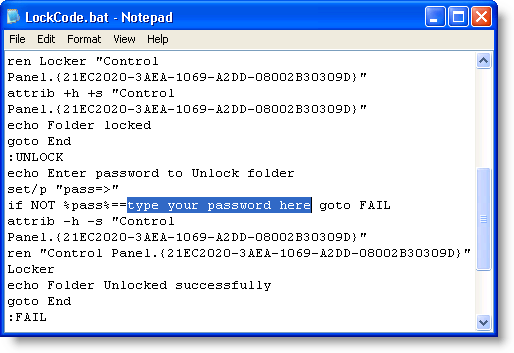
We have previously written about a utility used to lock files and folders in Windows, How to Protect and Lock Folders in Windows. Here is a method for locking files and folders without having to install a third-party software program. Download the following text file, which contains the code for the batch file:LockCode.txtOpen the file in Notepad. Replace “type your password here” in the LockCode.bat file with the password you want to use to lock and unlock the protected files and folders. DO NOT forget this password. Save the file as LockCode.bat. NOTE: We realize this seems unsecure to enter your password in plain text into a text file, but this will be discussed later.Read more: Help desk geek
Optical illusions - the brain just sees what it expects to see
Another example of how the brain just fills in the missing blanks . Unless you are one of the 0.7% of people who suffer from schizophrenia, you are unable to instruct your brain to see the hollow side of the rotating mask.
Remember the lazy visual brain when designing slides. The brain tends to follow lines in the reading direction, and sometimes finds it hard to spot the word "not" in a sentence, just to name a few examples. Read more: sticky slides
View video: Charlie Chaplin optical illusion (Youtube)
Remember the lazy visual brain when designing slides. The brain tends to follow lines in the reading direction, and sometimes finds it hard to spot the word "not" in a sentence, just to name a few examples. Read more: sticky slides
View video: Charlie Chaplin optical illusion (Youtube)
Conficker Eye Chart
How to know if you infected with Conficker virus by imagesRead more: Conficker Eye Chart
Use Advanced Font Ligatures in Office 2010
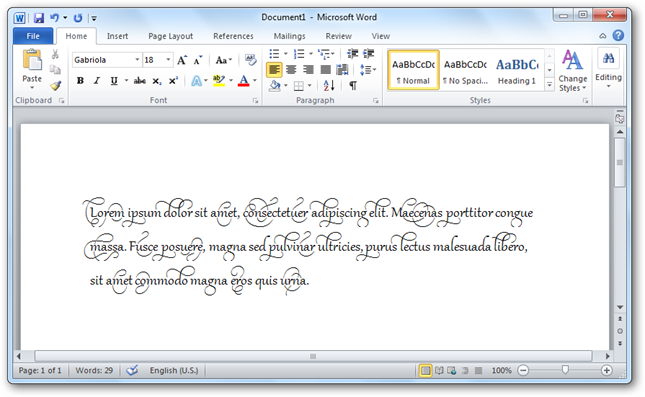
Fonts can help your documents stand out and be easier to read, and Office 2010 helps you take your fonts even further with support for OpenType ligatures, stylistic sets, and more. Here’s a quick look at these new font features in Office 2010. IntroductionStarting with Windows 7, Microsoft has made an effort to support more advanced font features across their products. Windows 7 includes support for advanced OpenType font features and laid the groundwork for advanced font support in programs with the new DirectWrite subsystem. It also includes the new font Gabriola, which includes an incredible number of beautiful stylistic sets and ligatures. Now, with the upcoming release of Office 2010, Microsoft is bringing advanced typographical features to the Office programs we love. This includes support for OpenType ligatures, stylistic sets, number forms, contextual alternative characters, and more. These new features are available in Word, Outlook, and Publisher 2010, and work the same on Windows XP, Vista and Windows 7. Please note that Windows does include several OpenType fonts that include these advanced features. Calibri, Cambria, Constantia, and Corbel all include multiple number forms, while Consolas, Palatino Linotype, and Gabriola (Windows 7 only) include all the OpenType features. And, of course, these new features will work great with any other OpenType fonts you have that contain advanced ligatures, stylistic sets, and number forms. Using advanced typography in WordTo use the new font features, open a new document, select an OpenType font, and enter some text. Here we have Word 2010 in Windows 7 with some random text in the Gabriola font. Click the arrow on the bottom of the Font section of the ribbon to open the font properties. Read more: How-to-geek
Windows 64-bit PCs Unable to Boot After Installing BitDefender Update
On the morning of Saturday, March 20th, a flawed BitDefender update was automatically pushed out to all 2008, 2009 & 2010 users. Following this event, it was discovered that BitDefender was falsely detecting several Windows and BitDefender files as infected with the Trojan.Fakealert.5 virus. As a result, there were reports of BitDefender and/or Windows and/or certain programs becoming inoperable, as well as PCs failing to boot.BitDefender promptly released a new automatic update which fixes these issues. Read more: WinMatrix
Read more: BitDeffender
Read more: BitDeffender
Turritopsis nutricula jellyfish

This species of jellyfish might be the only animal in the world to have truly discovered the fountain of youth. Since it is capable of cycling from a mature adult stage to an immature polyp stage and back again, there may be no natural limit to its life span. Because they are able to bypass death, the number of individuals is spiking. "We are looking at a worldwide silent invasion," says Dr. Maria Miglietta of the Smithsonian Tropical Marine Institute. Read more: 10 animals with the longest life spans
How To Evade URL Filters With (Not-So) Fancy Math
In their constant quest to find new and interesting ways to abuse the Internet, attackers recently have begun using an old technique to obfuscate URLs and IP addresses to bypass URL filters and direct users to malicious sites. The technique takes advantage of the fact that modern browsers will allow users to specify IP addresses in formats other than base 10. So a typical IP address that looks something like this — 192.10.10.1 — can also be written in base 8, hexadecimal or a handful of other formats, and the browser will recognize it and take the user to the specified site. What is interesting though is that due to the relative obscurity of using such methods to denote an IP or URL, it is quite feasible that existing security products do not correctly identify the URLs as valid or flag them as malicious when they point to existing known bad websites. Read more: Slashdot
IOGraph

Formerly known as MousePath it was made by Moscow designer Anatoly Zenkov to brighten up the routine work. Posting it at Flickr caused informal interest and afterward Anatoly Zenkov and his colleague Andrey Shipilov decided to evolve the app. IOGraph — is an application that turns mouse movements into a modern art. The idea is that you just run it and do your usual day stuff at the computer. Go back to IOGraph after a while and grab a nice picture of what you’ve done! Read more: IOGraph
Kleo Bare Metal Backup for Servers
With Kleo, you can now create all inclusive backups of your customers servers. Saves 100s of hours tracking down original CD’s or obsolete device drives. Kleo enables you to recover from server failure without the need of any other software. Comes with the Carroll-Net Server Recovery Kit. It includes hundreds of specialized server recovery tools. With it you can rescue failed servers, recover lost passwords and troubleshoot boot up problems.And best of all – it’s completely free! It makes the perfect addition to any computer technicians tool bag. Make as many copies as you like, even leave copies with your customers, or share with friends or colleagues. Reliable & Complete Bare Metal Backups for your customer’s servers (include's 100 free tools)Read more: Kleo Bare Metal Backup for Servers
New Legislation Would Crack Down On Online Criminal Havens
The Hill reports that Senators Orrin Hatch (R-Utah) and Kirsten Gillibrand (D-NY) have introduced a bill that would penalize foreign countries that fail to crack down on cyber criminals operating within their borders. Under the bill the White House would have the responsibility of identifying countries that pose cyber threats and the president would have to present to Congress in an annual report. Countries identified as 'hacker havens' would then have to develop plans of action to combat cybercrimes or risk cuts to their US export dollars, foreign-direct investment funds and trade assistance grants. Numerous American employers, including Cisco, HP, Microsoft, Symantec, PayPal, eBay, McAfee, American Express, Mastercard and Visa, as well as Facebook, are supporting the Senators' legislation. Read more: Slashdot
Comparison of Architecture presentation patterns MVP(SC),MVP(PV),PM,MVVM and MVC
This article will compare four important architecture presentation patterns i.e. MVP(SC),MVP(PV),PM,MVVM and MVC. Many developers are confused around what is the difference between these patterns and when should we use what. This article will first kick start with a background and explain different types of presentation patterns. We will then move ahead discussing about the state , logic and synchronization issues. Finally we will go in detail of each pattern and conclude how they differ from each other. Here’s my small gift for all my .NET friends , a complete 400 pages FAQ Ebook which covers various .NET technologies like Azure , WCF , WWF , Silverlight , WPF , SharePoint and lot more from here.
Special thanks This whole article is abstract from http://martinfowler.com/eaaDev/uiArchs.html GUI architectures. Great work by Mr. Martin flower.
Josh Smith and team http://msdn.microsoft.com/en-us/magazine/dd419663.aspx , great work on MVVM.
Mr. Nikhil kothari's blog http://www.nikhilk.net/Silverlight-ViewModel-Pattern.aspx , awesome source for MVVM.
Mr. Oleg Zhukov explains how to build a MVP Framework for .NET http://www.codeproject.com/KB/architecture/DotNetMVPFramework_Part1.aspx Background - Presentation patterns One of the biggest problems associated with user interface is lot of cluttered code. This cluttered code is due to two primary reasons , first the UI has complicated logic to manipulate the user interface objects and second it also maintains state of the application. Presentation patterns revolve around how to remove the UI complication and make the UI more clean and manageable. Below are different variety and classifications of presentation patterns as shown in the below figure. Read more: Codeproject
Special thanks This whole article is abstract from http://martinfowler.com/eaaDev/uiArchs.html GUI architectures. Great work by Mr. Martin flower.
Josh Smith and team http://msdn.microsoft.com/en-us/magazine/dd419663.aspx , great work on MVVM.
Mr. Nikhil kothari's blog http://www.nikhilk.net/Silverlight-ViewModel-Pattern.aspx , awesome source for MVVM.
Mr. Oleg Zhukov explains how to build a MVP Framework for .NET http://www.codeproject.com/KB/architecture/DotNetMVPFramework_Part1.aspx Background - Presentation patterns One of the biggest problems associated with user interface is lot of cluttered code. This cluttered code is due to two primary reasons , first the UI has complicated logic to manipulate the user interface objects and second it also maintains state of the application. Presentation patterns revolve around how to remove the UI complication and make the UI more clean and manageable. Below are different variety and classifications of presentation patterns as shown in the below figure. Read more: Codeproject
Use TortoiseHg (Mercurial) with SVN repository
It is trivial to use Mercurial client (TortoiseHg) to access Subversion repositories. Once you have the latest TortoiseHg, the process works easily. First you need to grab the hgsubversion extension: mkdir C:\repos
hg clone http://bitbucket.org/durin42/hgsubversion/ C:\repos\hgsubversionInfo about the hgsubversion extension. Then, you enable the extension: Right-click context menu - TortoiseHg - Global Settings - Edit File - add the lines below to your Mercurial.ini file:[extensions]
hgsubversion = C:\repos\hgsubversionNow you can, for example, grab the Autofac repository, using the usual check-out path prefixed with SVN: svn+https://autofac.googlecode.com/svn/trunkRead more: Rinat Abdullin
hg clone http://bitbucket.org/durin42/hgsubversion/ C:\repos\hgsubversionInfo about the hgsubversion extension. Then, you enable the extension: Right-click context menu - TortoiseHg - Global Settings - Edit File - add the lines below to your Mercurial.ini file:[extensions]
hgsubversion = C:\repos\hgsubversionNow you can, for example, grab the Autofac repository, using the usual check-out path prefixed with SVN: svn+https://autofac.googlecode.com/svn/trunkRead more: Rinat Abdullin
Windows 7 Start Button Changer v 2.0
Windows 7 Start Button Changer is a free tiny portable tool that allows you to change your Windows 7 start orb/button with just one click.Just follow the 1-2-3 simple steps to change your start orb: 1. Run the tool as administrator and click on "Select & Change Start Button".2. When it asks for the new start orb bitmap, either choose from any of the sample start orb bitmaps provided or choose the one you have.
If you have changed the start orb bitmap for the first time using this tool then it will create a backup of the unmodified explorer.exe.3. The Windows Explorer will now restart automatically and you will get the new start orb/button which you choosed. If you want to revert to the original start orb then click on "Restore Original Explorer Backup".Read more: DevianArt
If you have changed the start orb bitmap for the first time using this tool then it will create a backup of the unmodified explorer.exe.3. The Windows Explorer will now restart automatically and you will get the new start orb/button which you choosed. If you want to revert to the original start orb then click on "Restore Original Explorer Backup".Read more: DevianArt
Remove page flicker in IE8
In this pet project of mine I have two large background images. Unfortunately this means that IE will display a nasty page flicker on each request. I used to get rid of this with the a metatag that looks like this: <!--[if IE]>
<meta http-equiv="Page-Exit" content="blendTrans(Duration=0.0)" />
<![endif]-->For some reason however, this doesn't work in IE8 with cached pages. Use this tag instead and it all works fine again. <!--[if IE]>
<meta http-equiv="Page-Exit" content="Alpha(opacity=100)" />
<![endif]--> Read more: Wesley Bakker
<meta http-equiv="Page-Exit" content="blendTrans(Duration=0.0)" />
<![endif]-->For some reason however, this doesn't work in IE8 with cached pages. Use this tag instead and it all works fine again. <!--[if IE]>
<meta http-equiv="Page-Exit" content="Alpha(opacity=100)" />
<![endif]--> Read more: Wesley Bakker
36 Best Business Books that Influenced Microsoft Leaders
There are more books coming out every year than I can read in a lifetime. One of the ways I filter for great books is, I ask the most effective people I know, which books had a significant impact on how they think, feel, or act. I like to find the books that really made a difference, not just in theory, but in practice. Recently, I reached out to several Microsoft leaders, past and present, and up and down the ranks. The beauty of Microsoft is the extremely high concentration of smart people and I like to leverage the collective brain. In this case, I posed a simple question to find out which business books actually made a difference: “What are the top 3 books that changed your life in terms of business effectiveness?”I ended up with a really eclectic set ranging from parenting guides to changing the world. The top 3 business books that showed up multiple times were: Blue Ocean, Good to Great, and The Five Dysfunctions of a Team. This actually didn’t surprise me. I’ve been using Blue Ocean at work on a regular basis and Good to Great was a core part of the culture of the Microsoft patterns & practices team (the team I’m on.) Here are 36 best business books that influenced the Microsoft leaders that I reached out to: 1. All I Really Need to Know I Learned in Kindergarten
2. Authentic Leadership: Rediscovering the Secrets to Creating Lasting Value (J-B Warren Bennis Series)
3. Blue Ocean Strategy: How to Create Uncontested Market Space and Make Competition Irrelevant
4. Built to Last: Successful Habits of Visionary Companies
5. Execution: The Discipline of Getting Things Done
6. Fierce Conversations: Achieving Success at Work and in Life One Conversation at a Time
7. First, Break All the Rules: What the World’s Greatest Managers Do Differently
8. Fortune’s Formula: The Untold Story of the Scientific Betting System That Beat the Casinos and Wall Street
(more...)
Read more: Source of Insight
2. Authentic Leadership: Rediscovering the Secrets to Creating Lasting Value (J-B Warren Bennis Series)
3. Blue Ocean Strategy: How to Create Uncontested Market Space and Make Competition Irrelevant
4. Built to Last: Successful Habits of Visionary Companies
5. Execution: The Discipline of Getting Things Done
6. Fierce Conversations: Achieving Success at Work and in Life One Conversation at a Time
7. First, Break All the Rules: What the World’s Greatest Managers Do Differently
8. Fortune’s Formula: The Untold Story of the Scientific Betting System That Beat the Casinos and Wall Street
(more...)
Read more: Source of Insight
SQL SERVER – Difference Between ROLLBACK IMMEDIATE and WITH NO_WAIT during ALTER DATABASE
Today, we are going to discuss about something very simple, but quite commonly confused two options of ALTER DATABASE. The first one is ALTER DATABASE …ROLLBACK IMMEDIATE and the second one is WITH NO_WAIT. Many people think they are the same or are not sure of the difference between these two options. Before we continue our explaination, let us go through the explanation given by Book On Line. ROLLBACK AFTER integer [SECONDS] | ROLLBACK IMMEDIATESpecifies whether to roll back after a specified number of seconds or immediately.NO_WAITSpecifies that if the requested database state or option change cannot complete immediately without waiting for transactions to commit or roll back on their own, then the request will fail. If you have understood the difference by now, there is no need to proceed further. If you are still confused, continue with the rest of the post. Read more: Journey to SQL Authority with Pinal Dave
Windows Phone 7 OS can't run native code
Microsoft confirmed Monday at the company's Mix 10 developers event that native applications will not be allowed on Windows Phone 7 devices. Only applications running in the Silverlight runtime environment, or games in the XNA Game Studio runtime, will be allowed. That was the answer by Todd Brix, senior director for Mobile Platform Services Product Management, to a question from U.K.-based technology journalist Tim Anderson.Brix confirmed that Windows Phone 7, the user interface overlay atop the Windows Embedded CE 6.0 Release 3 kernel, runs only interpreted or managed code through the two runtime environments provided by Silverlight and XNA. Read more: InfoWorld
A C# wrapper for nearby Bluetooth devices Discovery under Windows Mobile
This code sample is named WMBluetoothWrapper. It demonstrates simple Bluetooth device discovery via the WinSock 2 API and provides a C# wrapper class for running the discovery. Both the names of the mobile devices and their addresses are retrieved and marshaled to C# data types. I provide both the Visual Studio 2010 DLL project WMBluetoothWrapper which present the WinSock 2 based discovery function as well as the C# file including the BluetoothConnection wrapper class. Using the retrieved addresses, the current wrapper can be extended to include further functions, such as, Bluetooth based connection and data exchanging functions. BackgroundAs part of my plan to write a mobile social network application (coming soon) using Windows Mobile Bluetooth capable devices, I need a way to know what Bluetooth devices are near me. I'm developing a mobile social network application in C# using the .NET compact framework 3.5 and thus, I was confronted with the need of writing the whole low level Bluetooth based functionalities in C++, compiling them into a DLL and finally writing a C# wrapper class and using P/Invoke(s) in order to run the Bluetooth functions. Before going ahead in the development of the wrapper, I've tried to find third-party libraries in C# exposing Bluetooth discovery functionalities, and I found 32feet.NET which seems to be popular from what I've read, however it seems to present some license limitations and after all it is better to have the control on a simpler and customizable wrapper. ArchitectureThe BluetoothConnection class is written in C# and it uses P/Invoke to gain access to exported functions within the WMBluetoothWrapper DLL file. The later is written in C++ and makes use of the Bluetooth functionalities provided by the Winsock 2 API in order to build the devices discovery function. Read more: Codeproject
Beginning Mac Programming
It’s time for another stop on the Books That I Have Known tour. This time I’d like to highlight a recently released Pragmatic title, Beginning Mac Programming, by Tim Isted.I am a fan of introductory texts, mainly because I’m often a newcomer to a particular subject myself. There’s a huge need for introductions: it’s important to hone and advance your skills, but it can be daunting to find a place to begin if you’re just starting out. And beginner books are not easy to write: the author has to really consider what it was like to learn the topic, and find a balance between giving the reader what they need and inundating them in useful but overwhelming details. Everyone’s a beginner sometime. There can be a certain degree of embarrassment about it: you sort of feel like you’re on your own, and it’s hard to ask questions of people who clearly know what they’re doing and don’t seem like they want to be bothered. I had a karate teacher (yes, I know, I’m a dork) who used to say when he visited other schools he would always wear a white belt, although he’d been teaching various martial arts for years. I like to think that his purpose was not to fool people into underestimating him so he could kick them in the head. The point is that no matter how skilled you are, it’s important to remember what it’s like to be new, to be a beginner. Read more: Editor's Field Journal
Image Insertion – Extension #2

The image insertion tool allows you to drag and drop images directly into your code, as shown below with an image of a UML diagram. Or, you could include your UI mockups to live literally alongside your code.
But the real reason I am including this extension is to prove to you this is an entirely new editor. In the image below, I’ve inserted a stick figure karate fighter (written in Silverlight) doing a side snap kick directly above the “Throw Kick” button click event handler. Read more: Sara Ford weblog
SQL Injection and the “Flintstones/Jetsons” Way to Deal with Licence Plate Cameras

“Flintstones/Jetsons” is a term that Mark Mothersbaugh from Devo uses to describe technology solutions that are a combination of low- and high-tech. It’s probably an apt term for what the driver of the Renault in the photo above is doing to foil licence plate cameras. If the “Jetsons” part – the SQL injection attack comprising the text on the banner on the bumper – doesn’t work, the “Flintstones” approach of physically covering up the licence plate will. Read more: Developer connection
Forcing an executable to run in 32bit mode
Since i am not a OS expert I would normally not write about this, but i was trying to run the BizTalk Documenter tool and always got startup errors.The customer environment is: * BizTalk 2006 R2 SP1 64 bits
* Windows 2003 server R2 64Bits
* SQL Server 2005 SP3 64 BitsIn my case the error was due that it seems Documenter Tool it is not able to run on 64bits on the detailed environment. So how literally force the tool to run on 32 bit mode? Just running a tool called CorFlags.exe Syntaxcorflags.exe Microsoft.Services.Tools.BiztalkDocumenter.exe /force /32BIT+
Great… but I do not see the tool, where is it?As far as i know it is installed by: * Microsoft Windows 200X SDK (C:\Program Files\Microsoft SDKs\Windows\v7.0\Bin\x64>) (note: this path is from a Windows 7 SDK)
* Visual Studio 2005 and above (C:\Program Files\Microsoft Visual Studio\SDK\v 2.0\Bin)Read more: BizTalk Tips & Things
* Windows 2003 server R2 64Bits
* SQL Server 2005 SP3 64 BitsIn my case the error was due that it seems Documenter Tool it is not able to run on 64bits on the detailed environment. So how literally force the tool to run on 32 bit mode? Just running a tool called CorFlags.exe Syntaxcorflags.exe Microsoft.Services.Tools.BiztalkDocumenter.exe /force /32BIT+
Great… but I do not see the tool, where is it?As far as i know it is installed by: * Microsoft Windows 200X SDK (C:\Program Files\Microsoft SDKs\Windows\v7.0\Bin\x64>) (note: this path is from a Windows 7 SDK)
* Visual Studio 2005 and above (C:\Program Files\Microsoft Visual Studio\SDK\v 2.0\Bin)Read more: BizTalk Tips & Things
מציאת קובץ שבה מוגדר מחלקה
עד היום (עד המעבר ל - Visual Studio 2010) כשהיינו בוחרים ב - Go To Definition על מחלקה מסויימת - היינו רואים באיזה Namespace המחלקה מוגדרת, אבל לא היה דרך הגיונית למצוא באיזה dll זה יושב (כדי לדעת למה לעשות AddReference) ב - VS2010 כשמגיעים ל - Go To Definition בחלק העליון מופיע הקוד הבא:
#region Assembly mscorlib.dll, v4.0.30128
// C:\Program Files (x86)\Reference Assemblies\Microsoft\Framework\.NETFramework\v4.0\mscorlib.dll
Server.Transfer Vs. Response.Redirect
לאחרונה שאלו אותי כמה אנשים על ההבדל בין Server.Transfer לבין Response.Redirect? מתי משתמשים בכל אחד מהם? ומדוע כדאי להשתמש ב Server.Transfer?
אז הגיע זמן לענות על השאלות :)
Response.Redirectהפקודה הזאת אומרת לדפדפן לעבור לעמוד המבקש:Response.Redirect("http://one-v.co.il/");Server.Transferגם הפקודה אומרת לדפדפן לעבור לעמוד המבוקש: Server.Transfer(http://one-v.co.il);אז מה ההבדל?Server.Transfer שומרת על הנתיב הנוכחי של העמוד ומעבירה רק את בקשה. אחד היתרונות של הפעולה היא חיסכון בבקשות של HTTP. החסרון בזה הוא שניתן להשתמש Server.Transfer רק כשרוצים להעביר באותו דומיין, Server.Transfer לא יעבוד במידה ונרצה להעביר לדומיין אחר.Server.Transfer ("http://one-v.org"); //won't work Server.Transfer מאפשר לנו גם לשמור את הנתונים של העמוד הקודם:Server.Transfer("send.aspx", true");
אז הגיע זמן לענות על השאלות :)
Response.Redirectהפקודה הזאת אומרת לדפדפן לעבור לעמוד המבקש:Response.Redirect("http://one-v.co.il/");Server.Transferגם הפקודה אומרת לדפדפן לעבור לעמוד המבוקש: Server.Transfer(http://one-v.co.il);אז מה ההבדל?Server.Transfer שומרת על הנתיב הנוכחי של העמוד ומעבירה רק את בקשה. אחד היתרונות של הפעולה היא חיסכון בבקשות של HTTP. החסרון בזה הוא שניתן להשתמש Server.Transfer רק כשרוצים להעביר באותו דומיין, Server.Transfer לא יעבוד במידה ונרצה להעביר לדומיין אחר.Server.Transfer ("http://one-v.org"); //won't work Server.Transfer מאפשר לנו גם לשמור את הנתונים של העמוד הקודם:Server.Transfer("send.aspx", true");
Read more: Arnold Simha
Is your MySQL Server Loaded ?
So you're running the benchmark/stress test - how do you tell if MySQL server is really loaded ? This looks like the trivial question but in fact, especially when workload consists of simple queries I see the load generation and network really putting a lot less load on MySQL than expected. For example you may have 32 threads (or processes) running queries as fast as they can... does it really mean there is an 32 concurrent queries ran all the time ? It may be the case or it may be not... Read more: DZone
Web Test Authoring and Debugging Techniques for Visual Studio 2010
A New Name, But Under the Covers Still the SameIn this release we renamed "Web Test” to “Web Performance Test” to highlight the primary scenario for Web tests, which is using them as scripts in a load test to model user actions. Load tests are used to drive load against a server, and then measure server response times and server response errors. Because we want to generate high loads with a relatively low amount of hardware, we chose to drive Web performance tests at the protocol layer rather than instantiating a browser. While Web performance tests can be used as functional tests, this is not their primary focus (see my post Are Web Tests Functional Tests?). You will see that I still refer to “Web Performance Tests” as “Web Tests” for short. If you really want to test the user experience from the browser, use a Coded UI test to drive the browser.In order to be successful working with Web Performance Tests, it is important you understand the fundamentals about how they work.
Web Performance Tests Work at the HTTP LayerThe most common source of confusion is that users do not realize Web Performance Tests work at the HTTP layer. The tool adds to that misconception. After all, you record in IE, and when running a Web test you can select which browser to use, and then the result viewer shows the results in a browser window. So that means the tests run through the browser, right? NO! The Web test engine works at the HTTP layer, and does not instantiate a browser. What does that mean? In the diagram below, you can see there are no browsers running when the engine is sending and receiving requests Read more: Ed Glas's blog on VSTS load testing
Read more: VS 2005: Web Test Authoring and Debugging Techniques
Read more: VS 2008: Web Test Authoring and Debugging Techniques for VS 2008
Web Performance Tests Work at the HTTP LayerThe most common source of confusion is that users do not realize Web Performance Tests work at the HTTP layer. The tool adds to that misconception. After all, you record in IE, and when running a Web test you can select which browser to use, and then the result viewer shows the results in a browser window. So that means the tests run through the browser, right? NO! The Web test engine works at the HTTP layer, and does not instantiate a browser. What does that mean? In the diagram below, you can see there are no browsers running when the engine is sending and receiving requests Read more: Ed Glas's blog on VSTS load testing
Read more: VS 2005: Web Test Authoring and Debugging Techniques
Read more: VS 2008: Web Test Authoring and Debugging Techniques for VS 2008
SQL SERVER – Fix : Error : 8501 MSDTC on server is unavailable. Changed database context to publisherdatabase
During configuring replication on one of the server, I received following error. This is very common error and the solution of the same is even simpler.MSDTC on server is unavailable. Changed database context to publisherdatabase. (Microsoft SQL Server, Error: 8501) Solution:Enable “Distributed Transaction Coordinator” in SQL Server.Method 1: 1. Click on Start–>Control Panel->Administrative Tools->Services
2. Select the service “Distributed Transaction Coordinator”
3. Right on the service and choose “Start”Method 2:Read more: Journey to SQL Authority with Pinal Dave
2. Select the service “Distributed Transaction Coordinator”
3. Right on the service and choose “Start”Method 2:Read more: Journey to SQL Authority with Pinal Dave
Visual Dumpbin - A C# Visual GUI for Dumpbin
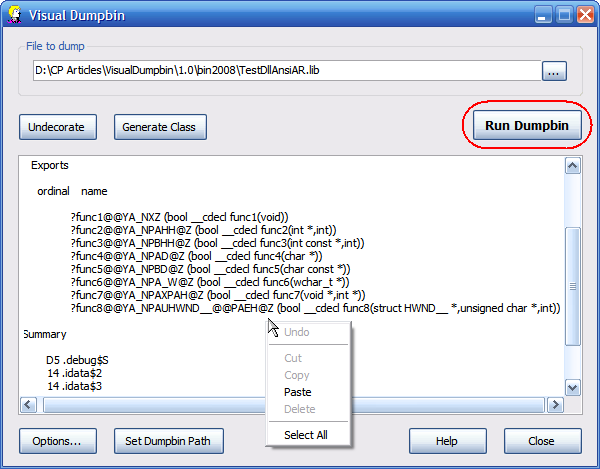
Since I started working with .NET, I use dumpbin frequently, since some of my work involves integrating unmanaged C++ DLLs, most of which I do not have source code for. It is very tedious to find the file I want to dump, open a command prompt, run dumpbin, open the output file, and finally copy the information I want. For .lib files this is bad enough, but for .dll files it is even worse; .lib files contain undecorated function prototypes, but .dll files do not. I put together Visual Dumpbin to help with this. After you select the file you want to dump, you see the exported functions with just one clickRead more: Codeproject
Subscribe to:
Posts (Atom)